
Tamil Hindu Wedding Rituals and Traditions
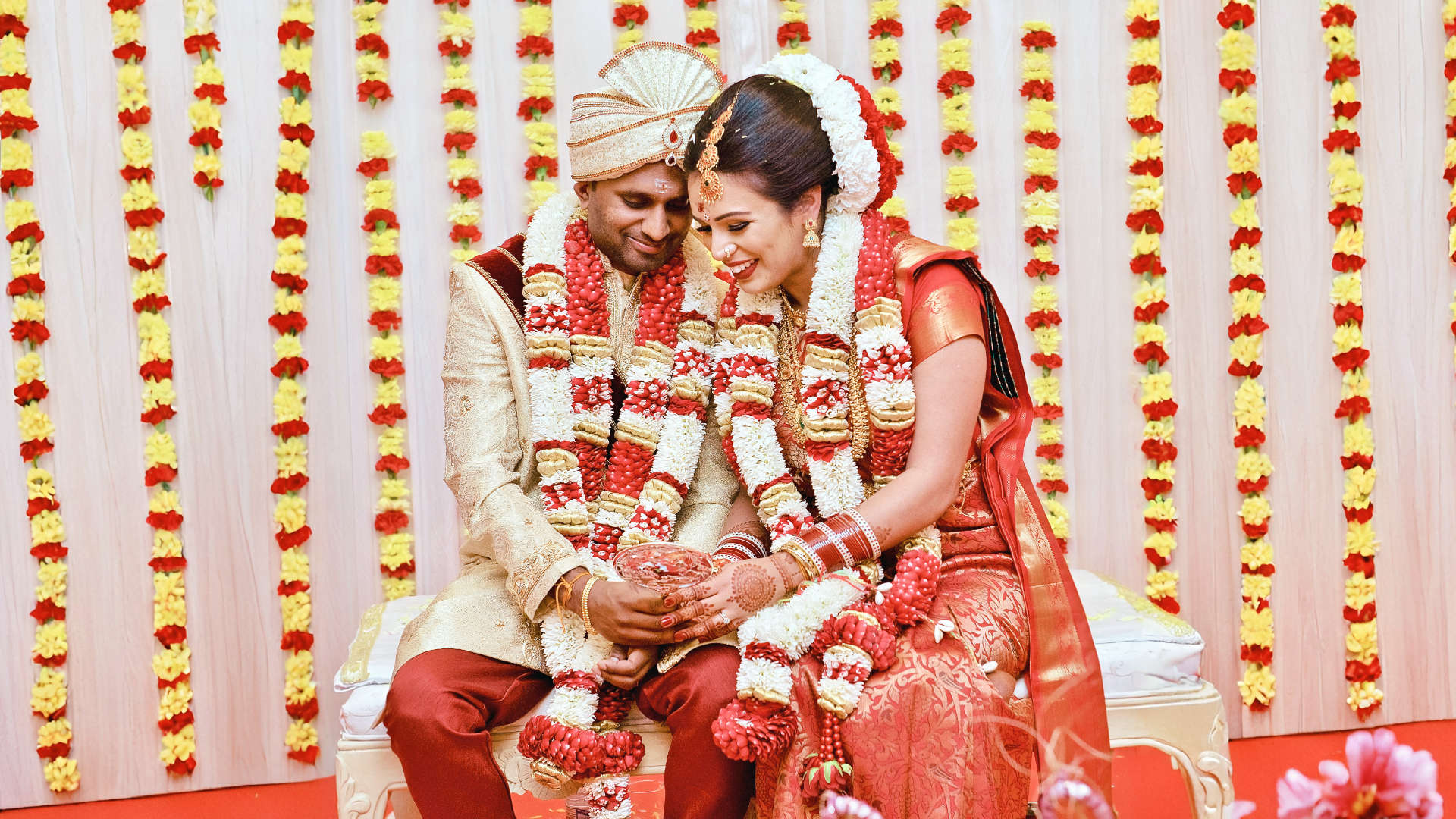
Your Essential Guide to Hindu Tamil Wedding Traditions in the U.K.
Did you know that Tamil Hindu wedding traditions are among the oldest wedding ceremonies in the world, with roots over 3,000 years deep? These wedding rituals continue to thrive and evolve, even in the U.K. Many Hindu Tamil couples – whether of Indian or Sri Lankan heritage – face questions like: What do these rituals mean? Which traditions are essential?
The U.K. or European Tamil Hindu couples feel overwhelmed by the sheer number of Tamil wedding ceremonies and customs. Many couples don’t know the meaning, timing, or how to perform those wedding rituals. Family guidance helps, but even elders may differ – especially when balancing tradition with modern life.
This guide will help you learn the main Tamil Hindu wedding rituals and traditions. You’ll gain a clear understanding of each step, from the arrival of the groom to the tying of the thali. I will also list some other helpful tips about the suppliers and temples in the U.K.
Before the big day, pre-wedding rituals such as Nichayathartham (formal engagement) and Ponnurukku (the crafting of the thali pendant) set the stage. While these traditions are important, this guide focuses on the main event: the wedding day!
Should you choose a temple or a venue for your Tamil wedding?
Tamil weddings are normally held in wedding venues. Some couples prefer sacred temples like Shree Ghanapathy Temple (Wimbledon, UK). The intimate and spiritual setting of a temple holds a unique charm, making it a meaningful choice for those seeking a traditional experience. Ultimately, deciding between a wedding venue and a temple rests on personal preference.
Welcoming the Groom with Ritual Grace and Timeless Style
Tamil weddings begin with the Mappillai (groom), his family, and the tholan (best man) arriving at the venue and being greeted by the bride’s family with a garland and aalathi.
Aalathi, performed with lighted lamps and flowers, is a ritual to ward off the evil eye. Some may not realise that this sacred gesture is traditionally carried out by married women, who are seen as symbols of marital bliss and prosperity.
Traditionally, the groom arrives in a veshti and angvastram, paired with an off-white shirt. However, modern trends have introduced the kurta, a versatile shirt available in various fabrics, designs, and lengths.
In humility and honour, Tholan stands beside the groom.
As with any wedding, the best man has a key role in supporting the groom, and this is no different in Tamil weddings. However, what’s a little different is that Tholan is usually a close male relative.
Some Tamils may have seen the tholan wash the groom’s feet at the entrance – but not many of us know why. It is understood that this act marks the tholan’s respect towards the groom and symbolises humility and service.
In return for his support, the groom presents the tholan with a ring, a token of gratitude for his contribution to the wedding journey. After this exchange, the groom is led to the manavarai (marriage dais) to begin the wedding ceremony.
Sacred Beginnings with Ganesha Pooja


A longstanding Tamil wedding custom that symbolises the value of religion is to address Lord Ganesha. Its significance is recognised in Tamil weddings through the Ganesha Pooja (prayer or worship ceremony). The Pooja marks the spiritual beginning of a Tamil wedding.
The priest invokes Lord Ganesha, the remover of obstacles and the bringer of good fortune, on behalf of the groom and sanctifies the manavarai with holy water and mantras.
The priest gives the groom a thetpai (ceremonial grass ring) to symbolise mental clarity and nature’s connection in this pooja. The priest also fastens a saffron thread around the groom’s right wrist to protect against malevolence.
The priest then invites married women to place nine grains mixed with milk in a pot – a gesture to invoke fertility and prosperity.
The Bride’s Moment

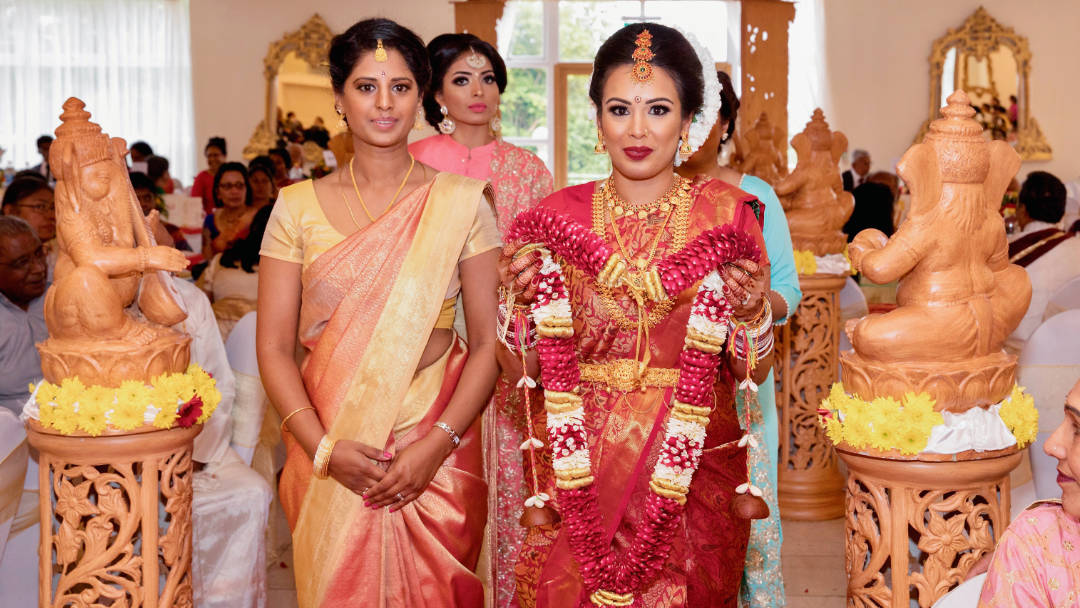
At all weddings, the bride’s arrival brings excitement and awe to everyone. The transition in music and heads slowly turning towards the entrance.
The Tholi (maid of honour) escorts the bride to the manavarai. The thli is often the groom’s sister or a close relative. Accompanied by her bridesmaids and tholi, she walks toward the manavarai, where she takes her place to the groom’s right. The couple see each other for the first time at this point on the wedding day.
Traditional Tamil Kanyadaan
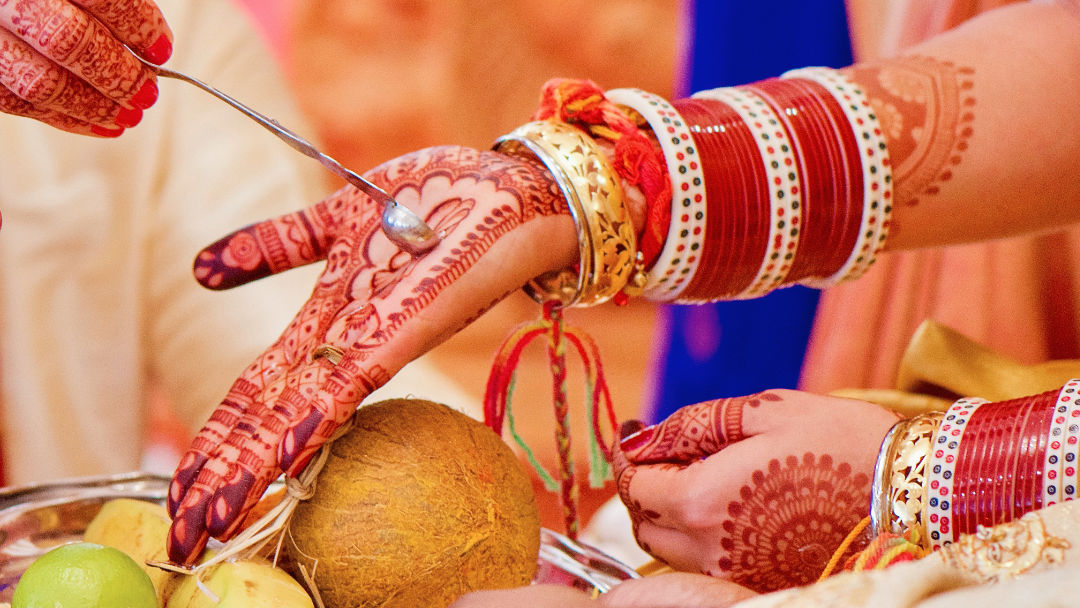

The next tradition in a Tamil wedding is an emotional one (particularly for the bride’s family) and is known as Kanyadaan
The term ‘Kanyadaan’ comes from two Sanskrit words. ‘Kanya’ means girl or maiden, and ‘Daan’ means donation or gift, symbolising the act of ‘giving away the bride’. Many families in the U.K. and other western countries now view it as a symbol of blessing and unity, where both parents support the couple’s new journey.
This tradition involves the bride’s parents placing the bride’s hands in the groom’s palm. This simple act signifies the bride’s parents entrusting their daughter’s well-being to the groom. This ritual has variations, and the way Kanyadaan is performed varies based on family practices.
In some Tamil weddings, the bride sits on her father’s lap with a coconut in her hands. The bride’s father then lifts her hands and passes the coconut to the groom, whilst the bride’s mother sprinkles holy water over it. But why a coconut, you may ask? The coconut, with its sturdy shell filled with nourishing water, represents ideas of wholeness, abundance, and the couple’s commitment to nurturing one another.
The Koorai Saree
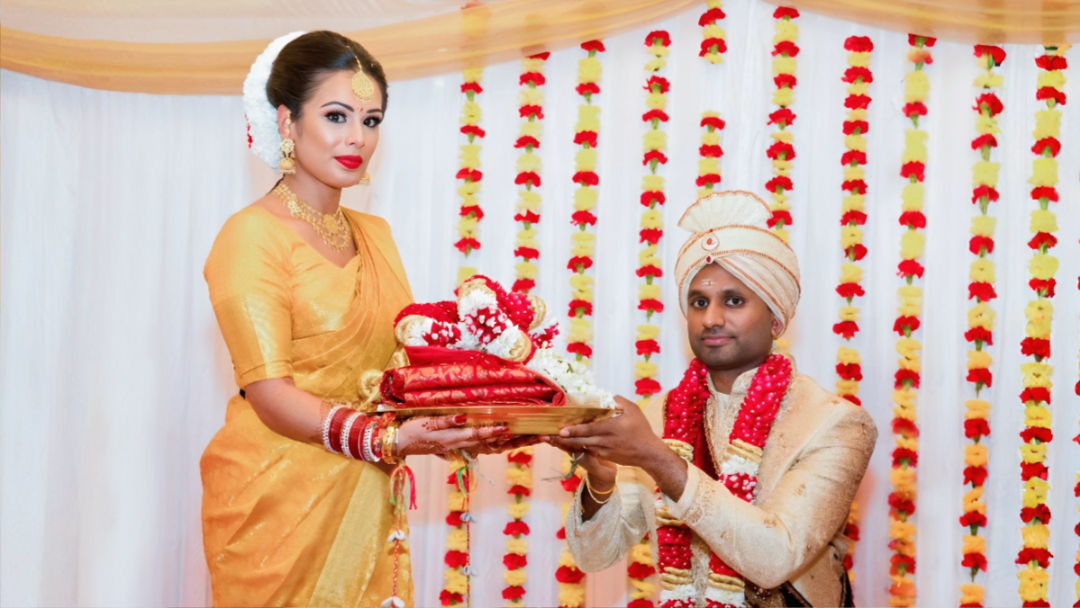

The groom gives the bride a koorai saree and thali after Kanyadaan. A red koorai saree is auspicious in Hindu culture and symbolises prosperity and strength.
The priest blesses the koorai saree and thali before they are circulated among family members and guests for their blessings. The bride then leaves the manavarai with the tholi and changes into her koorai saree.
Tying of the Thali
At the heart of this Tamil marriage ritual is “Thali,” the symbolic equivalent of a wedding ring. It is typically a gold pendant strung on a yellow thread or a gold chain, adorned with sacred symbols such as the Om or deity-related motifs.
In South India, the yellow thread (dyed with turmeric) is preferred due to its auspicious associations. In North India, the thali is commonly tied using a gold chain. In the UK, the couples can choose between a yellow thread and a gold chain based on their cultural background. Both types of Thali are commonly used.
Dressed in her koorai saree, the bride returns to the manavarai, carrying a garland for the groom. Upon joining him, she places the garland around his neck, marking yet another warm moment in the ceremony.
Close family and friends now surround the manavarai. The groom ties the thali around the bride’s neck as classical music enhances the spiritual impact.
In response, loved ones shower the couple with fresh flowers, offering heartfelt wishes. This moment leaves friends and family feeling emotional – some tears from the overwhelming atmosphere, but mostly wide smiles as they reflect on this beautiful moment.
The groom applies kumkumam (scarlet saffron) to his wife’s forehead by placing his arm around her and using his middle finger. This sign shows she’s married now. The couple exchange garlands to show their acceptance of one another.
Reflections of a New Beginning
After the thali ceremony, the couple is presented with a mirror. Gazing into the mirror together signifies self-reflection and unity. It allows the newlyweds to see their reflection as one, marking the first moments of their shared life as a married couple.
Breaking the Fast Together
Sometimes, couples fast on their wedding day. Traditionally, family members hold up a saree, creating a private space for the couple as they feed each other for the first time as husband and wife.
Typically, the diet consists of vegetarian snacks or fresh fruit, symbolising the couple’s pledge to look out for one another through thick and thin.
The Seven Sacred Steps: Saptapadi
The couple takes seven steps around a sacred fire (homam) in three rounds, each holding the other’s pinkie finger. They are accompanied by the tholan and tholi throughout this ritual.
What is the significance of holding the pinkie finger? The pinkie finger is recognised as the weakest finger, so holding each other by this finger signifies the couple’s support for one another during their weakest.
As the newlyweds walk around the fire, the priest recites seven vows, each signifying a fundamental aspect of their journey together:
-
To nurture and uplift one another.
-
To grow together in physical and mental strength.
-
To seek prosperity and wealth as a unit.
-
To share joys and sorrows with unwavering support.
-
To pray for the well-being of their family.
-
To pursue a long and healthy life together.
-
To remain lifelong companions, bound by love and trust.
After their vows, the groom places his wife’s feet on a granite stone. This symbolises the strength and stability of their union. He then places a Metti (toe ring) on her right foot’s second toe and repeats this gesture on her left foot.
According to one belief, the second toe is associated with a nerve that connects to the reproductive organs. Stimulating this nerve is thought to improve reproductive health. Another belief is that wearing the metti regulates energy flow and promotes a balanced life. It is also believed to promote stability in marriage.
Nalangu
This next stage in a Tamil wedding is a light-hearted game designed to entertain the newlyweds and the guests. The priest drops a ring into a pot filled with water and flowers. During three rounds, the couple competes to find the ring in the pot.
This game echoes compromise in marriage. Interestingly, some believe that whoever finds the ring first will rule the roost in the marriage!
A Shower of Blessings
The priest blesses the newlyweds, followed by their parents and relatives. They used saffron-coloured rice and flower petals for the blessing. Rice is a staple food in South Indian and Sri Lankan cultures and symbolises sustenance and prosperity. The practice of showering the couple with rice grains is another way to wish them a fulfilling married life.
The ceremony concludes with two married women performing an Aarti, to ward off the evil eye, as the couple begins their journey together as husband and wife.
Read More: Vibrant Sikh Wedding Birmingham
Tying More Than a Thali: A Celebration of Togetherness
From brightly coloured attire and the sacred tying of the thali to the heartfelt exchange of garlands and the countless blessings received, Tamil weddings are filled with symbolism and prayers for the couple’s happiness and relationship. It’s evident that a Tamil wedding is more than just the union of two individuals; it is a profound celebration marking the union of two families and their friends.