
Gujarati Wedding Ceremonies and Traditions Step-by-Step Guide

A Guide to Gujarati Wedding Ceremonies and Rituals
Are you thinking of organising a Gujarati wedding and don’t know anything about the tradition? This guide aims to provide a clear and detailed overview of Gujarati wedding ceremonies and traditions, helping you navigate these beautiful traditions with confidence. This step-by-step guide will walk you through the rich ceremonies, vibrant traditions, and unique customs that define these celebrations.
As a wedding photographer and videographer, we have photographed many Gujarati weddings all over the U.K. We have seen that many couples find it difficult to know the process and rituals throughout the wedding day. Let us walk you through each step, from Ponknu Ceremony to Kanyadaan, making your wedding authentic and stress-free.
Gujarati Wedding Rituals


Most Indian weddings take place in the wedding venues, there are many famous Indian wedding venues, however, some prefer to organise their Mandap ceremony in Hindu temples. One of the popular and intricately designed Gujarati Hindu temples in the UK is BAPS Shree Swaminarayan Temple in London. Other temples for weddings in the UK include Shree Swaminarayan Temple in Willesden, The Shree Sanatan Hindu Mandir, and The Shri Swaminarayan Mandir in Cardiff. The beautiful backdrop of these temples amidst the grandeur of a big fat Gujarati wedding makes the ceremony more exciting. A Gujarati wedding involves a series of rituals.
Jaan, Agaman, or Baraat


Many other cultures in India share the wedding Jaan tradition. In Punjabi weddings, it’s also called Jann or Barrat, and the pattern and energy are very much the same.
The bridegroom and his family arrive at the wedding venue. Indian grooms ride a horse as part of their tradition. A band plays traditional Indian music as his family and friends dance in the Jaan. It is common, even in the U.K., for the groom to carry a sword as a sign of bravery. The excitement builds as they approach the Marriage
The bride’s mother performs the groom’s Aarti, and the whole family welcomes the Jaan. Once the welcome is complete, the groom asks the bride’s mother for her blessing by touching her feet.
As the groom gets back to his standing position, the bride’s mother playfully tries to grab his nose. At the same time, the groom must prevent her from doing so. This fun ritual is just to remind the groom that the mother-in-law is giving her precious daughter to him. Thus, he should be humble and grateful.
Ponknu Ceremony
After the groom arrives at the venue with his family, the bride’s mother greets them with Aarti and sweets. The groom stands at the arch before going to the wedding Mandap for the Ponknu Ceremony. The bride’s mother applies tilak (a red dot) with rice, kumkum, and choka to his forehead.
The bride’s mother takes a water pot, circles around the groom, and pours water four times on each side of the groom’s floor. This is called Najar utarna rictual.
Next is a pohana. The bride’s mother throws pre-decorated sticks in all four directions.
Before the groom starts waving to the mandap, he has to break a small clay pot. He must break it in one go with his right foot. It symbolises the groom’s strength and ability to overcome obstacles. Some believe it indicates his readiness for marriage responsibilities.
Once he breaks the clay pot, the mother-in-law takes the groom to the mandap for the wedding rituals. After these ceremonies, the groom touches his future mother-in-law’s feet to bless her.
The bride’s mother playfully tries to grab his nose. At the same time, the groom has to prevent her from doing so. This fun ritual is just to remind the groom that the mother-in-law is giving her precious daughter to him. Thus, he should be humble and grateful.
The bride’s mother and other family members accompany the groom to the Mandap, where the main marriage ceremonies take place.
Gujarati Wedding Pooja


To obtain felicity, the groom performs Lord Ganesh, Lakshmi Narayan, Panchdev, Naugra, Varun Dev, and Kalash Pujas.
Madhuparka Ceremony


The groom symbolises Lord Vishnu in Gujarati culture. The bride’s parents must honour him by washing his feet with milk and water. They also offer Panchamrut to the groom, which is a mixture of yoghurt, milk, ghee, sugar, and honey.
Kanya Agaman (Bride’s entrance)


Before the bride reaches the Mandap, guests place fabric, or antarpaat, between the couple. The aim of this custom is to hide the couple’s faces from each other.
According to the Gujarati tradition, the bride’s mamas (maternal cunles) bring her to the mandap. I have seen the cousins, brothers, or even fathers bring the bride to the mandap in the absence of the mamas. Often, Gujarati bands play wedding music at the bridal entrance.
When the bride sits in front of the groom, the fabric is removed, and they see each other for the first time. You may refer to it as the Gujarati First Look.
Jaimala and Antarpaat


Then, it is time for the Jaimala or Varmala ritual. The couple exchanges bouquets or garlands. Often, traditional Gujarati wedding or Bollywood music performs in the background. The Garland ceremony signifies that they have accepted each other and are ready for the wedding. The bride gave the garland first to the groom, and then the groom it to the bride.
Kanyadaan


Like any other Hindu Indian wedding, the Gujarati wedding rituals also include the Kanyadaan ceremony. This ritual’s meaning has changed over time, especially in the U.K. and other western countries. This ritual involves the bride’s father giving his beloved daughter to the groom. First, he washes the groom’s feet and gives his daughter’s responsibility to the groom. The bride’s mother pours holy water over her husband’s hand.
Hasta Milap


It flows onto the joined hands. The priest ties the hands of the new couple using a sacred thread while chanting Vedic hymns. At the same time, the bride’s father asks the groom to look after her. All this while, the priest chants holy mantras that implore blessings for the couple and bless the union.
Mangal Phera and Saptapadi


The priest begins the Mangal Phere Pooja by inviting Agni Devi (the God of Fire). Then the priest lit the holy fire in the Hawan kund.
Unlike other Hindu wedding cultural traditions, the Gujarati wedding has four pheras. The bride and groom have to circle the sacred fire called yagna four times. These mantras symbolise the vow to stay together forever.
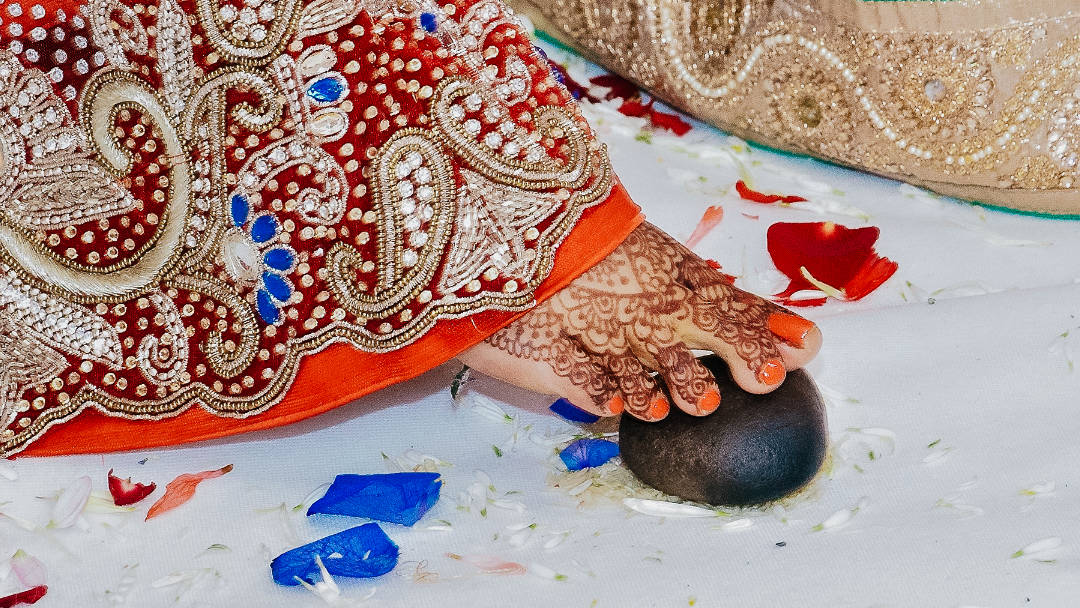
The couple touches a stone on their circumambulation path during the Mangal Phere. This symbolises their commitment to face challenges with strength and unity in their marriage. It also represents their determination and their promise to overcome problems together.
Each lap around the holy fire symbolises Dharma (obligation), Artha (prosperity), Kama (desires), and Moksha (liberation) for a happy marriage. At the start of each round, the bride’s brother gives the pair puffed rice to offer to the holy fire before each phera. The family and friends shower flowers on the couple during each phera.
Each phera has its own meaning. The first phera represents Dharma, or the duty to uphold family values. The second phera represents Artha, or the pursuit of prosperity and well-being. The third phera represents Kama, or the fulfilment of love, passion, and desires. Lastly, the fourth phera represents Moksha, or the pursuit of spiritual liberation and salvation.
In the first three pheras, the groom traditionally leads the bride. This signifies his active participation in various facets of life. On the other hand, the bride conducts the last phera, which represents harmony and fulfilment in their union.
7 Gujarati Hindu Marriage Vows: Saptapadi


The Gujarati Hindu marriage vows, known as the “Saptapadi,” consist of seven vows exchanged between the couple. Each vow represents a commitment to a fundamental aspect of married life in Gujarati culture. The couple take seven steps together.
- Nourishment: Promising to provide for each other and the family.
- Strength: Pledging to develop mental, physical, and spiritual strength.
- Prosperity: Ensuring mutual prosperity and happiness.
- Family: Committing to love and respect for each other’s families.
- Children: Praying for noble children and their well-being.
- Health: Promising to care for each other in sickness and health.
- Friendship: Vowing eternal friendship, loyalty, and love.
These seven steps form the core of a Hindu marriage ceremony, representing the couple’s vows and their journey into a lifelong partnership.
Mangal Sutra and Sindoor


The groom marks the bride’s new status as a married lady by applying sindoor, or vermilion, to her hair parting. This is part of the last rites of a Gujarati wedding. This symbolises that she is now a married woman. In addition, he ties the Mangal Sutra around her neck as a sign of their marriage. As they begin their married life together, the new couple seeks their elders’ blessings by touching their feet.
Due to the work environment and other factors, married Hindu women in the U.K. and other western countries rarely wear Sindoor and Mangal Sutra after the wedding day.
Chero Pakaryo
This is one of the rather humorous Gujarati wedding traditions that I have witnessed at several weddings. The groom grabs his mother-in-law’s pallu and asks for the most gifts. The bride’s family fulfils his wish by filling the mother-in-law’s pallu with presents and money for the groom.
Akhanda Sawhagavati
Seven married women from the bride’s family and friends approach her and whisper “Akhand Sawhagavati” and their blessings into her ear. “Akhand Sawhagavati” signifies enduring marital bliss and a fulfilling life with your husband. This is the end of the marriage ceremony.
Then the couple seeks the family elders blessings, and their parents come on stage and give their blessings.
Post Wedding Traditions and Rituals
Vidaai Ceremony


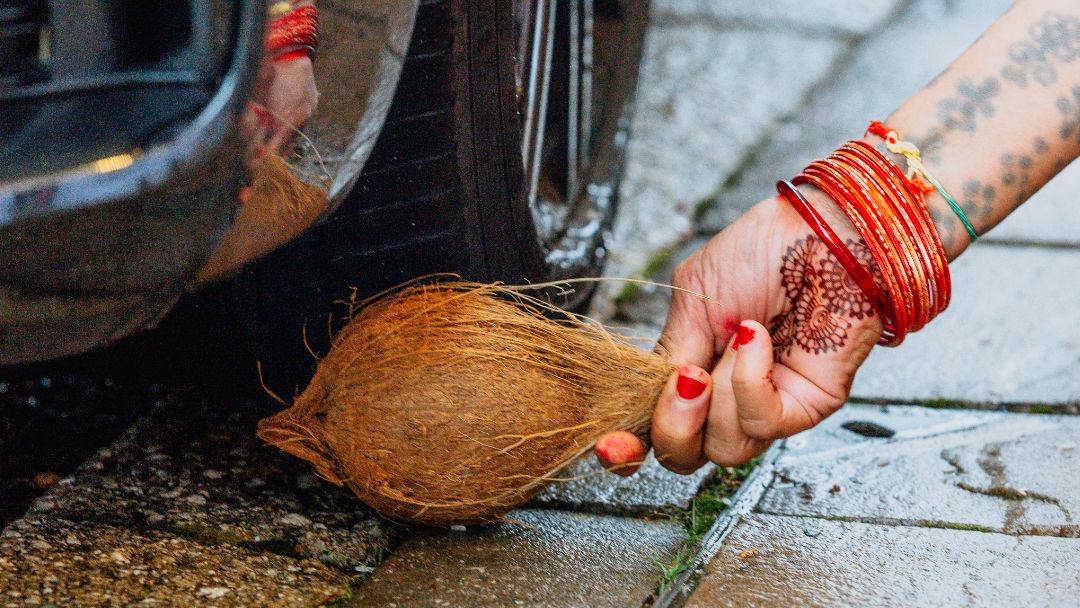
This is an emotional ritual wherein the bride says goodbye to her parents. She throws rice backward, which her mother has to collect with her pallu. This ritual signifies that the girl is repaying her parents’ obligations. While throwing the rice, the bride is not supposed to look back.
The Vidaai, also known as the Doli, is common at Indian weddings. It is very similar, regardless of the culture or the religious background.
Gharni Laxmi
This is one of the groom’s ceremonies that his family performs. The bride’s mother-in-law gives a warm welcome to the girl at her new house. She does aarti for the couple, after which the bride has to gently kick at a small pot.
This pot is full of grain and is placed in front of the ground. According to Gujarati wedding rituals, this is an auspicious ceremony. The bride steps into the house, usually with her right foot first. This marks her formal entry into her new family.
Aeki Beki
This is another fun wedding game popular in a Gujarati tradition. A large container filled with milk, vermilion, coins, and a ring is placed. The couple has to try and find the ring using only their right hand. Whoever wins receives a cash token as a reward.
Conclusion
Planning a wedding is more than choosing venues and rituals; it’s about connecting your children to their roots. As you navigate this journey, think about how each tradition can strengthen the bond between the past and the future. Your daughter’s wedding is an opportunity to create lasting memories filled with the warmth of your heritage and the joy of new beginnings.
Frequently Asked Questions:
Can you wear black to a Gujarati wedding?
Attending a Gujarati marriage is a vibrant and colourful event, often filled with traditional attire and festive celebrations. While many guests opt for bright colours and elaborate designs, the question arises: can you wear black to a Gujarati marriage? In Indian culture, black is traditionally associated with mourning, which may make it seem inappropriate. However, fashion norms are evolving, and many now embrace black as a chic and elegant choice. Ultimately, it’s essential to consider the family’s preferences and the specific customs of the event to ensure your attire is respectful and fitting.
How long is a Gujarati wedding ceremony?
The duration of a Gujarati wedding ceremony can vary significantly, often spanning several days. Wedding celebrations typically begin with pre wedding customs, which are essential in a guide to Gujarati wedding traditions. On the main wedding day rituals, the actual ceremony is held and can last between 3 to 4 hours. During this time, various rituals in a Gujarati wedding take place.
What is the difference in other Indian wedding traditions and rituals?
Indian marriage traditions vary widely across different regions, religions, and cultures, reflecting the country’s rich diversity. For instance, in Hindu weddings, rituals such as the kanyadaan and saat phere hold significant importance. In contrast, Muslim weddings emphasise the Nikah ceremony, where a marriage contract is signed, highlighting the legal aspect of the union.
Additionally, Sikh weddings take place in the Gurdwaras and take four Lavans around the Guru Granth Sahib Ji. They are also known for their vibrant celebrations and lively music, while South Indian weddings often feature elaborate rituals and traditional attire, emphasising cultural heritage. Each of these traditions brings unique elements to the celebration, making Indian weddings a truly diverse experience.